
What Makes an Action RPG Worth Coming Back To
Some games hook you with a story. Others hook you with a loop — the rhythm of challenge, reward, and growth. Endless Courage falls into the second category, but with a world that gives the loop meaning.

Some games hook you with a story. Others hook you with a loop — the rhythm of challenge, reward, and gradual growth that makes you want to play just one more level. Endless Courage falls into the second category, but with a world that gives the loop meaning.

Endless Courage — an action RPG built around progressive combat, weapon forging, and a world slowly reclaiming itself from darkness.
The Loop That Keeps You Playing
At its core, Endless Courage is an action RPG with a simple, satisfying rhythm:
- Enter a level — face waves of enemies and environmental challenges
- Earn rewards — materials, runes, experience
- Upgrade — forge better weapons, enchant gear, equip runes
- Face something harder — stronger enemies, new mechanics, tougher bosses
- Repeat — but now you’re stronger, and the world has opened up a little more
It’s a loop as old as gaming itself. What makes it work is the pacing — the sense that each cycle gives you something concrete. A new weapon ability. A rune that changes how you approach combat. A visual upgrade that makes your character look like they’ve actually been through something.
Combat That Rewards Preparation

The combat in Endless Courage isn’t just about reflexes. It’s about loadout decisions made before the fight starts.
Weapons are forged from materials gathered across levels. Different weapon types favor different approaches — fast strikes, heavy blows, ranged attacks, area-of-effect damage. The forging system means your weapon is yours in a way that random drops rarely achieve. You gathered the materials. You chose the upgrade path.
Runes add another layer. Equip a rune that boosts critical damage and you’ll build differently than if you equip one that regenerates health on kills. The rune system forces choices — you can’t have everything, so you have to commit to a build.
Enchantments refine that build further. They’re the fine-tuning: extra fire damage, faster cooldowns, better defense against specific enemy types. By the time you face a major boss, your loadout tells a story about how you’ve chosen to play.
A World With Weight

The setting of Endless Courage is built around a familiar fantasy premise — a world consumed by darkness, a group of warriors fighting to restore it — but executed with enough detail to make it feel lived-in.
The world is divided into regions that reflect different stages of the Void’s influence. Some areas are still fighting, with settlements holding out against corrupted creatures. Others are fully lost, transformed into hostile landscapes where the environment itself is dangerous. And scattered throughout are the remnants of what came before — ruins, temples, forgotten strongholds that hold the secrets needed to push back.
The Seven Pillars of Courage serve as the game’s structural backbone. Each pillar represents a different aspect of what it takes to resist a force like the Void — bravery, resilience, determination, selflessness, wisdom, unity, and love. Awakening a pillar isn’t just a plot point. It changes the world. Areas become less hostile. Survivors emerge. The landscape literally heals.
This matters because it makes progress feel real. You’re not just getting stronger — the world is getting better because of what you’ve done.
The Enemy Design Philosophy

The enemies in Endless Courage fall into two categories, and the game is at its best when it forces you to deal with both at once.
Void-corrupted creatures are the standard enemies — twisted versions of animals and people, each with attack patterns that can be learned and countered. They’re dangerous in groups but manageable individually. They teach you the combat system.
Bosses are where the game tests your build. Each major boss has mechanics that punish certain approaches and reward others. A boss with rapid, close-range attacks will destroy a slow, heavy build but struggle against mobility-focused players. A boss with elemental shields requires specific enchantments or runes to break through.
This design means you can’t just power through. You have to adapt. And adaptation requires understanding your tools — which means the upgrade system isn’t just progression, it’s preparation.
What the Upgrade System Gets Right
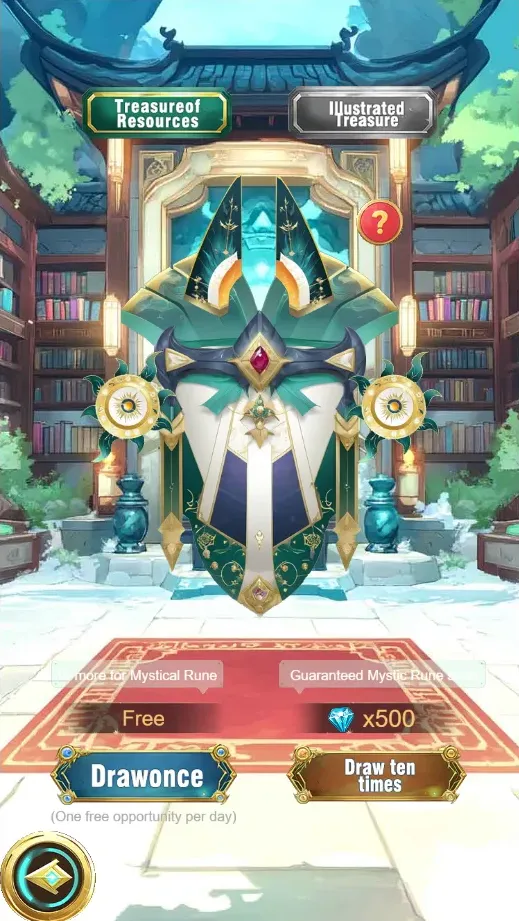
Upgrade systems in action RPGs often fall into two traps: they’re either too simple (just increase numbers) or too complex (overwhelming crafting trees with unclear benefits). Endless Courage finds a middle ground.
Weapon forging is straightforward but meaningful. Gather materials from levels and defeated enemies, choose an upgrade path, and forge. The paths are distinct enough that two players with the same base weapon can end up with completely different tools.
Rune equipping is where the build-crafting happens. Runes have set bonuses, synergies, and trade-offs. A rune that boosts attack speed might reduce defense. A rune that adds elemental damage might conflict with another rune’s effect. The system rewards experimentation and punishes mindless stacking.
Enchantments are the final layer — smaller bonuses that let you refine rather than redefine your build. They’re the difference between a good setup and one that feels exactly right for how you play.
The Pillar System: Structure With Meaning
The Seven Pillars of Courage do something important for the game’s pacing. They break the progression into chapters, each with its own theme, environment, and mechanical focus.
- Bravery — early levels that teach combat fundamentals
- Resilience — endurance challenges, longer levels, resource management
- Determination — difficult platforming and environmental puzzles
- Selflessness — escort and protection missions
- Wisdom — puzzle-heavy temple levels
- Unity — multi-character or companion-based sections
- Love — the final stretch, where the narrative and gameplay converge
Each pillar awakening changes the world in visible ways. New areas open. Existing areas become less hostile. NPCs react differently. It’s a structural choice that makes the game’s progression feel less like a checklist and more like a journey.
Who This Game Is For
Endless Courage isn’t trying to be everything to everyone. It knows its audience:
- Players who like preparation — the forging and rune systems reward thinking ahead
- Players who like visible progression — the world changes, your character looks different, your weapons evolve
- Players who want challenge without cruelty — difficult, but fair; punishing, but not arbitrary
- Players who want a reason to keep playing — the endless level structure means there’s always something to work toward
It’s not a narrative-driven RPG in the traditional sense. The story is present and coherent, but it’s a framework for the loop, not the main attraction. The main attraction is the feeling of starting a level a little stronger than last time, with a slightly better weapon, facing something that would have destroyed you ten hours ago.
Final Thoughts
The best action RPGs understand that progression isn’t just numbers going up. It’s the feeling of mastery — of knowing your build, understanding your enemies, and walking into a fight prepared rather than hoping for the best.
Endless Courage builds that feeling methodically. Each level teaches something. Each upgrade matters. Each pillar awakened is a milestone you can see and feel. The loop is simple, but the execution gives it weight.
If you’re looking for a game that respects your time, rewards your attention, and gives you something to show for every hour you put in, this one is worth the download.
Images courtesy of Hereford HBI.
Related Reading
- Why Build-Crafting Is the Most Satisfying Part of Modern RPGs
- The Difference Between Difficult and Unfair in Game Design
- How Progression Systems Keep Players Engaged Without Burning Them Out




Contact Us
Newsletter
Join our community for exclusive updates, tips, and offers—subscribe today!